
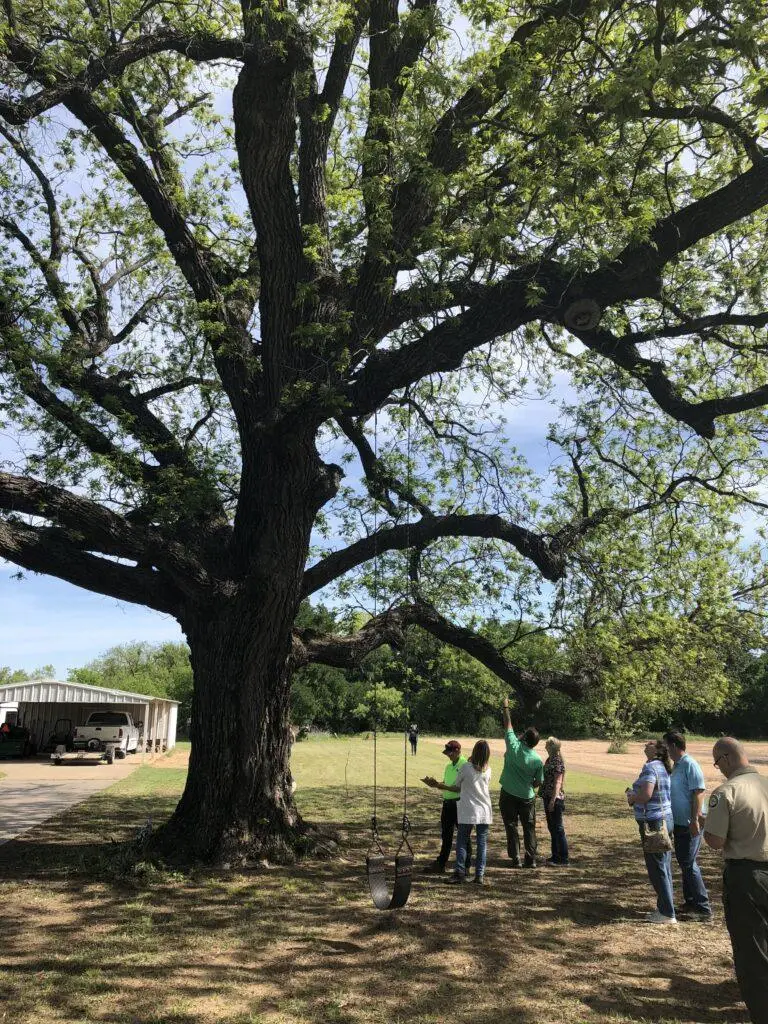
On April 28, the Texas Tree Tour headed west of DFW with 35 people on a bus tour to look at some very large trees and several Famous Trees of Texas. The weather was absolutely perfect. It was a full nine-hour day and about 300 miles. We enjoyed lunch at Mary’s Café in Strawn. It was a tasty, but lengthy, process of getting everyone fed.
There wasn’t much downtime on the bus. Discussions about local history were covered along the way. The group also learned detailed characteristics of pecans, live oaks, bur oaks and post oaks while on the bus. The route for the tour included beautiful FM4 from Grafford to Santo. This area is one of the most scenic areas in the Palo Pinto area: incredible vistas, steep terrain, high rock escarpments and peaceful native pecan orchards along a winding creek.
The first stop was just a few miles north of Weatherford to view the largest pecan in America. Courtney Blevins, our Regional Forester, reminded us of the North American range for pecan trees, and that we were probably viewing the largest pecan in the world. Now that was pretty impressive, and a real good start for the day.
The rest of the morning was spent viewing the graves of Oliver Loving and Bose Ikard. Oliver Loving and Charles Goodnight, with the support of Bose Ikard, started the Goodnight-Loving Trail, a very historic cattle trail that sent over 250,000 cattle to market. We viewed the very large pecan tree in Oren, Palo Pinto County, where these men forged their agreement to begin this historic trail. This story was the basis for the book and movie “Lonesome Dove”. History and fiction comparisons were made throughout the morning.
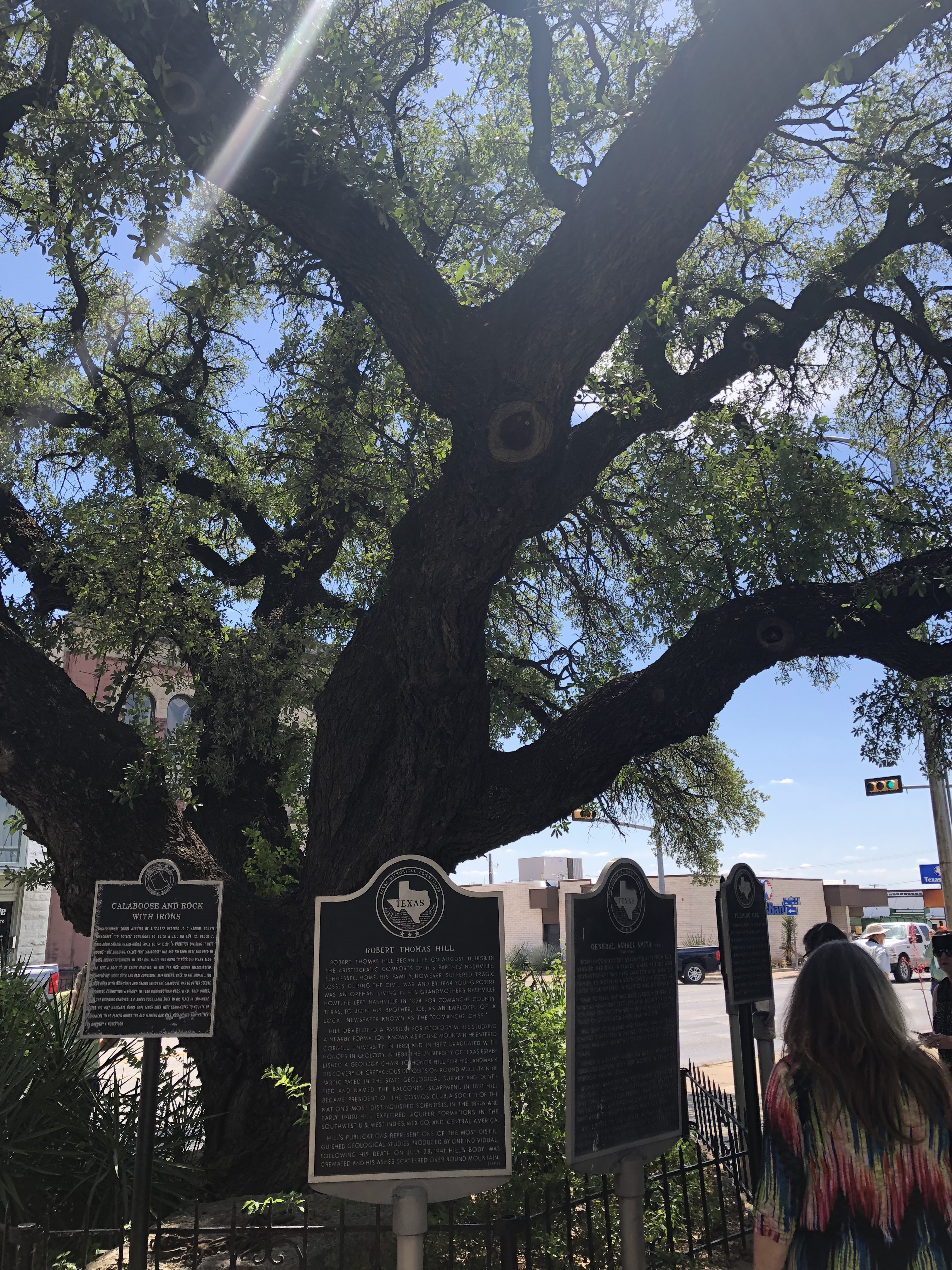 Fleming Oak (courtesy of the Texas Forest Service)
After lunch, we traveled to the downtown square in Comanche to see the huge and deeply furrowed bark of the Fleming Oak. Rumors abound surrounding this tree, but Martin Fleming, near 80 years old, toting a 10 gauge shotgun kept this tree from being removed for the reason of increased parking at the square about 1910. He said that the tree had saved his life many years earlier and his horse liked being tied there each day while he worked across the street.
East of Comanche, we saw the Choctaw Bill Robinson Oak. At this huge double-trunked live oak, the Rev. Bill Robinson would set his rifle and begin preaching, sometimes for hours. The Choctaw Indians thought that he preached way too long. He was the only original settler in this sinful town of Hazeldale to die with his boots off.
.jpg)
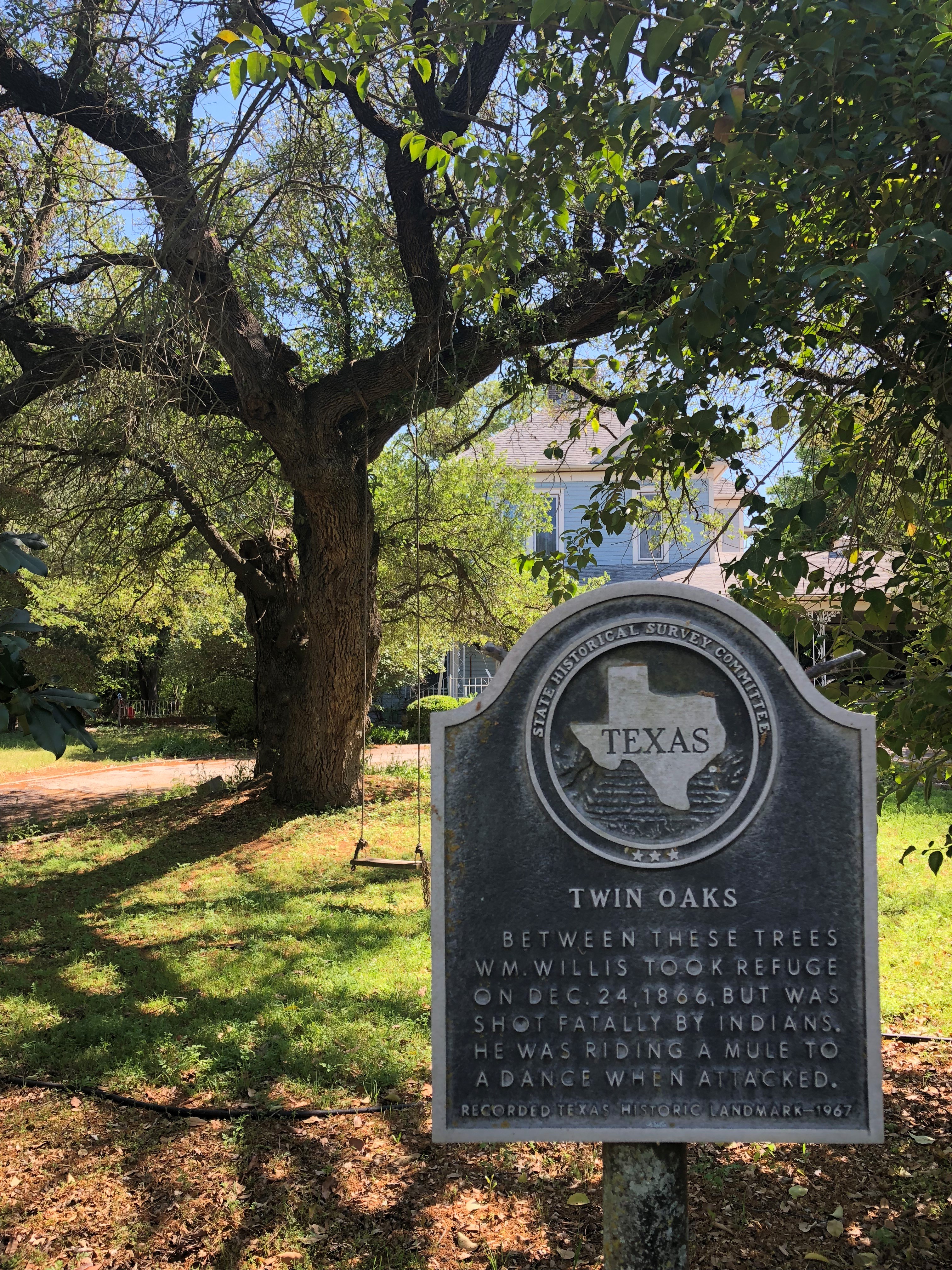
In Hamilton and the Twin Oaks, we reviewed the details of an Indian attack that took the life of William Willis who was traveling in severely cold weather to meet a girl at a Christmas Dance on December 24, 1866. He was the last man to be killed by Indians in Hamilton County. On the way back, we saw the former state champion bur oak in Benbrook.